Bounty hunter
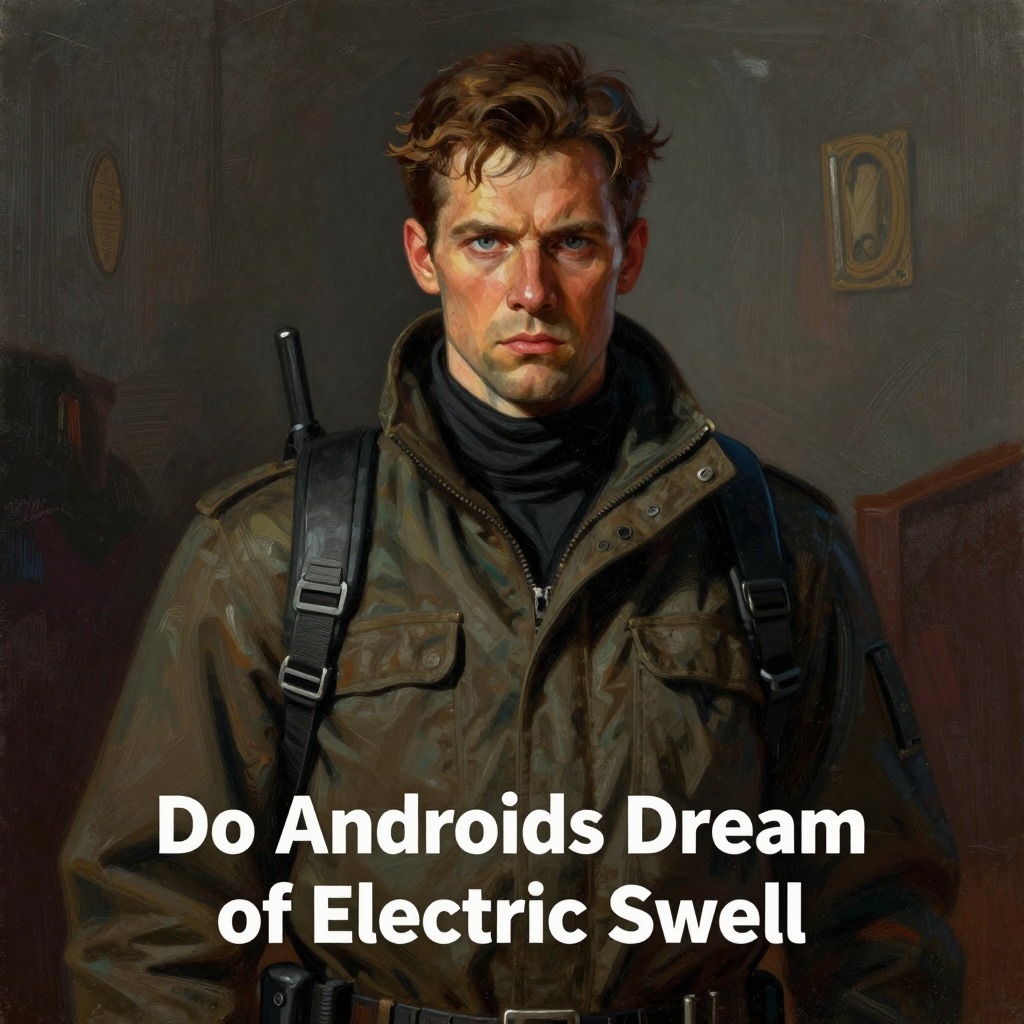
The bounty hunter is a professional killer employed by police departments to track down and 'retire' (kill) escaped androids, operating under a system that pays a bounty per android and relies on the Voigt-Kampff empathy test to distinguish androids from humans. This role is central to the novel's exploration of empathy, humanity, and the moral cost of violence, as protagonist Rick Deckard's encounters with Nexus-6 androids force him to confront the ethical implications of his work.
Identity and Background
A bounty hunter is a specialized law enforcement officer, distinct from a regular police officer, whose primary duty is to hunt and kill escaped androids. Rick Deckard, the novel's protagonist, works for the San Francisco Police Department and is introduced as a man who has "never killed a human being in my life" but who "retires" androids for a bounty of a thousand dollars each. The job is dangerous; Deckard's colleague Dave Holden is hospitalized with a laser track through his spine after an encounter with an android. The bounty hunter's role is justified by the legal and social framework of the post-apocalyptic world: androids are considered property, not persons, and their presence on Earth is illegal. The Voigt-Kampff empathy test is the primary tool used to identify androids, measuring autonomic responses to morally shocking stimuli to detect the lack of empathy that defines them.
Life and Plot Trajectory
Deckard's day begins with a mundane argument with his wife Iran about her depression and his electric sheep, but quickly escalates when he is assigned to retire six remaining Nexus-6 androids after Holden is incapacitated. His journey takes him from the Rosen Association in Seattle, where he tests Rachael Rosen and discovers the Voigt-Kampff test's limitations, to confrontations with androids Max Polokov, Luba Luft, and Inspector Garland. After a near-fatal arrest by android police, he teams with bounty hunter Phil Resch, who kills Garland and Luba Luft. Deckard then seeks help from Rachael Rosen, sleeps with her, and ultimately retires the final three androids—Pris Stratton, Irmgard Baty, and Roy Baty—in a suburban apartment building. The day ends with his goat killed by Rachael in revenge, and Deckard driving into the desert, where he experiences a solitary fusion with Wilbur Mercer and finds a toad, only to discover it is electric.
Key Actions and Objectives
The bounty hunter's primary objective is to locate and retire escaped androids, a task that requires both physical skill and psychological acuity. Deckard uses a laser tube, a Penfield wave transmitter to induce catalepsy, and the Voigt-Kampff apparatus to test suspects. He must also navigate the moral and emotional complexities of his work, as when he feels empathy for Luba Luft, an android opera singer, and struggles with his attraction to Rachael Rosen. The job demands speed and decisiveness; Deckard retires three androids in one day, a near-record, but the cumulative toll leaves him questioning his identity and purpose.
Relationships and Conflict
Deckard's relationships are shaped by his profession. His wife Iran resents his work, calling him a "murderer hired by the cops" and a "crude cop," and her depression isolates him. His encounter with Phil Resch, a fellow bounty hunter who enjoys killing, forces Deckard to confront his own motivations. The most significant relationship is with Rachael Rosen, an android who seduces him and later kills his goat in retaliation. This betrayal crystallizes Deckard's crisis: he cannot kill her despite knowing she is an android, and he realizes that his empathy for androids has undermined his ability to do his job. The conflict between his professional duty and his growing moral qualms is the novel's central tension.
Change and Ending
Deckard undergoes a profound transformation over the course of a single day. Initially confident in his role as a bounty hunter, he begins to question the morality of his work after killing Luba Luft and experiencing empathy for her. His fusion with Wilbur Mercer in the desert, where he is struck by rocks and feels alone, leads him to identify with Mercer and to see the world through his eyes. He finds a toad, believing it to be a real animal, but Iran discovers it is electric. Deckard's final acceptance of the electric toad—"The electric things have their lives, too. Paltry as those lives are"—signals a shift in his understanding of life and value. He returns home, exhausted, and sleeps, his future as a bounty hunter uncertain.
Narrative Role and Evaluation
The bounty hunter serves as the novel's central figure through which the themes of empathy, humanity, and the cost of violence are explored. Deckard's journey from a detached professional to a man haunted by his actions mirrors the novel's critique of a society that dehumanizes androids while clinging to the illusion of moral superiority. His inability to kill Rachael Rosen and his empathy for Luba Luft challenge the binary distinction between human and android, suggesting that empathy, not biology, defines humanity. The bounty hunter's role is ultimately a tragic one: he is a "scourge, like famine or plague," required to do wrong, and his work leaves him isolated and morally compromised.